Voice
▶Audio demo coming soon
Misremember listens to what you play, keeps a history of it, and lets moments from that past find their way back into the music. Every return has a life of its own.
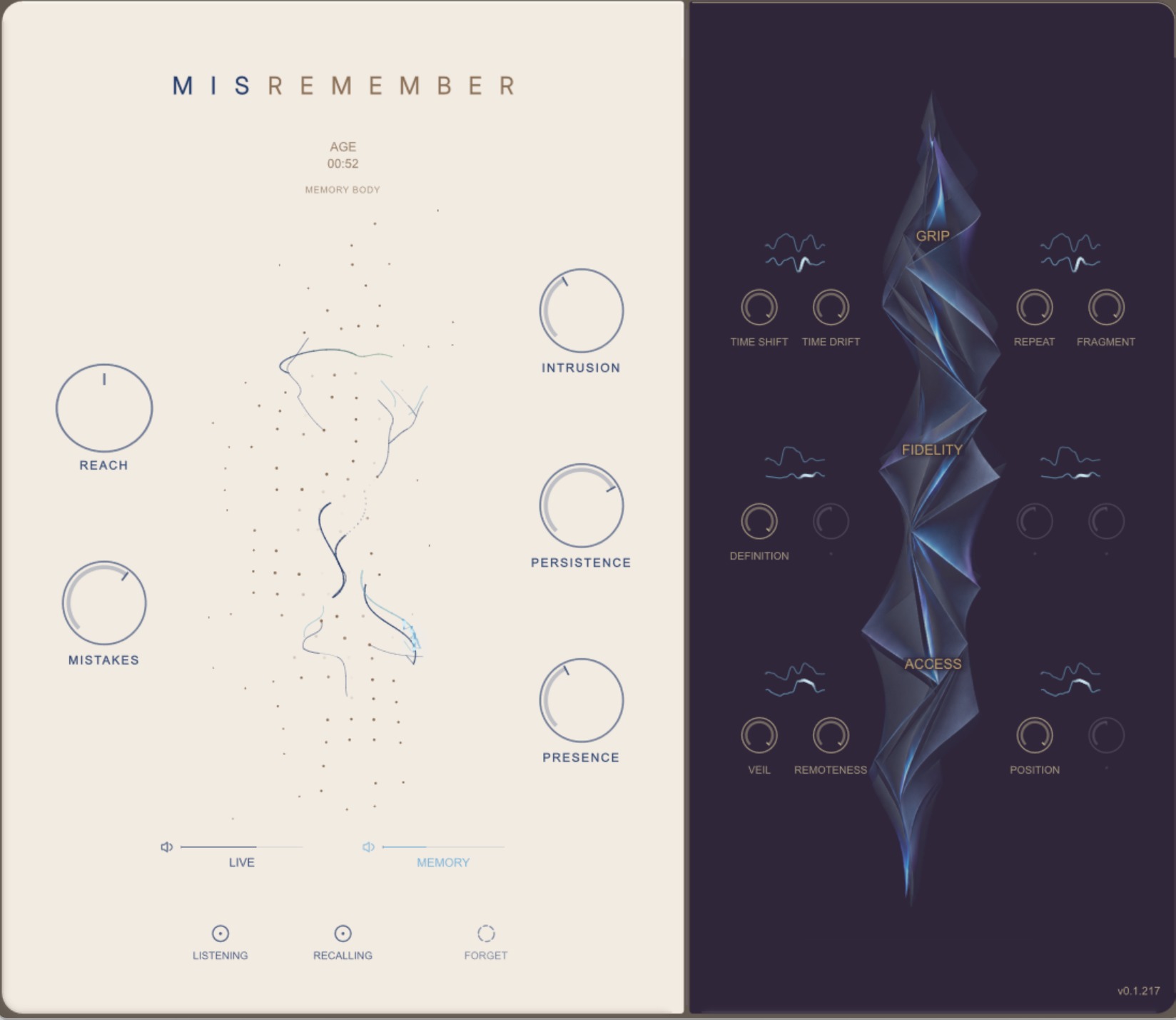
The clearest way to understand Misremember is to hear the same source become a different recall. Audio examples are the next piece to add to this page; these three slots are ready for voice, harmony and rhythm.
Misremember keeps the remembered source separate from the way it is recalled. The same phrase can return almost untouched, later slow down and drift, catch on a fragment, lose definition or recede into another space.
Every Recall is a fresh encounter with something that has already happened.
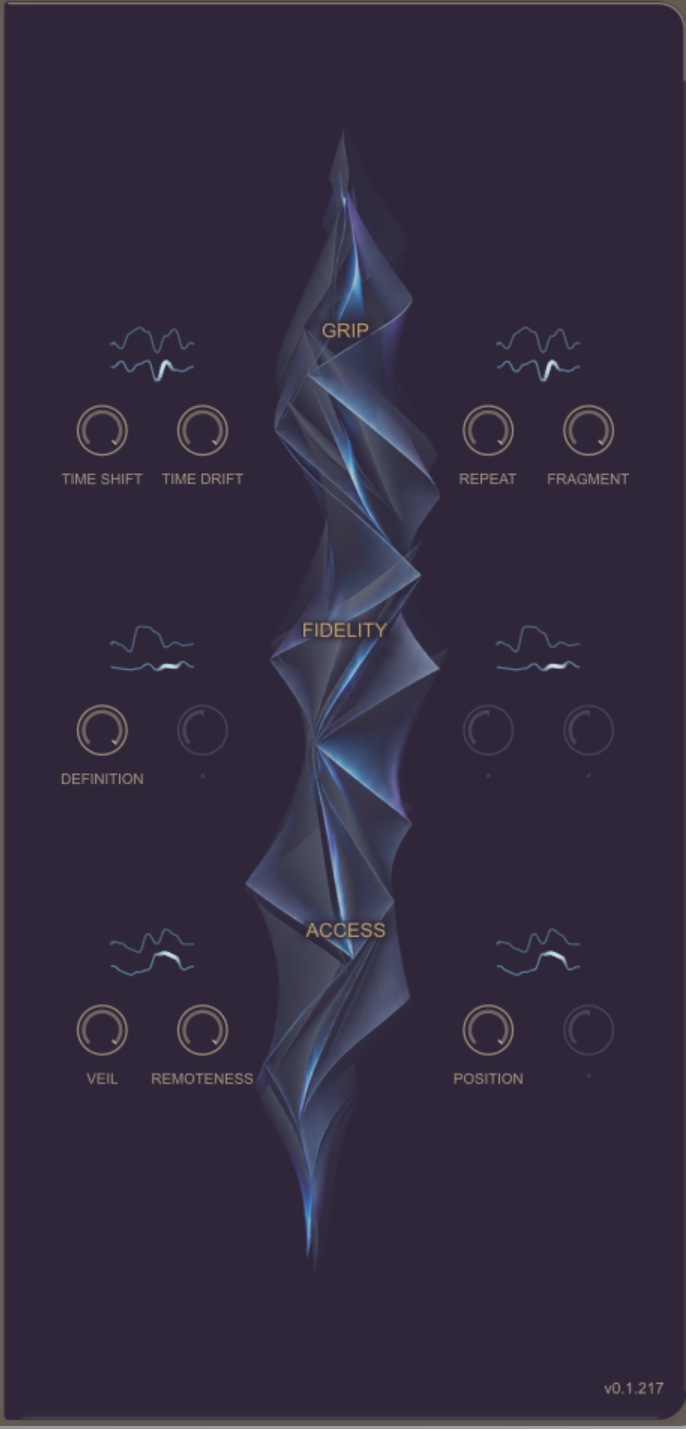
Misremember’s deeper controls are organised around three different kinds of imperfection. They can happen separately or together, so a memory can lose time without losing detail—or remain clear while feeling impossibly far away.
Change the memory’s relationship to time: shift its pace, let it drift, catch on a detail or jump inside the remembered event.
TIME SHIFT · TIME DRIFT · REPEAT · FRAGMENTLet fine information dissolve while the larger identity of the source stays recognisable.
DEFINITIONKeep the remembered content intact while changing how directly it reaches the present—veiled, remote or displaced.
VEIL · REMOTENESS · POSITIONThe main page stays intentionally spare. Five controls describe the behaviour of the memory as a whole; the deeper page decides what kinds of mistakes it is allowed to make.
Where in the remembered past Misremember is willing to search.
How unreliable the act of remembering is allowed to become.
How frequently memories enter the present.
How much time a recalled memory gets to develop before it disappears.
How much of the foreground belongs to recalled memory when it appears.
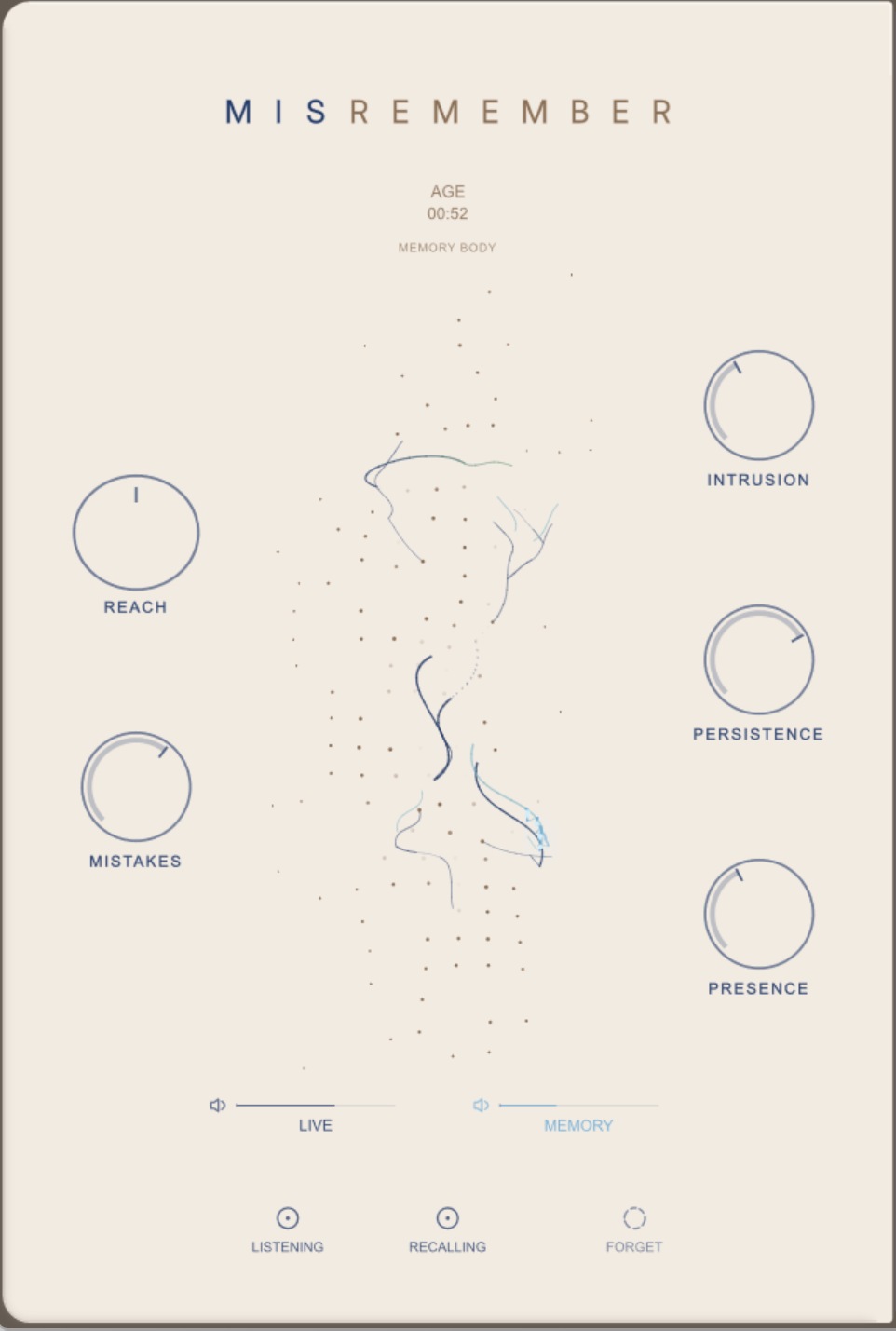
Recent sound is abundant and close at hand. Further into a session, some moments can remain available while others disappear. You are no longer working only with the sound entering the plugin now, but with material that has accumulated, survived and returned throughout the performance.
Sometimes very little happens.
That matters too.
Clear passages give an unexpected slip meaning. Recovery makes damage feel temporary rather than static. Misremember moves between intact, unstable, damaged and recovered instead of treating “more effect” as the only direction.